
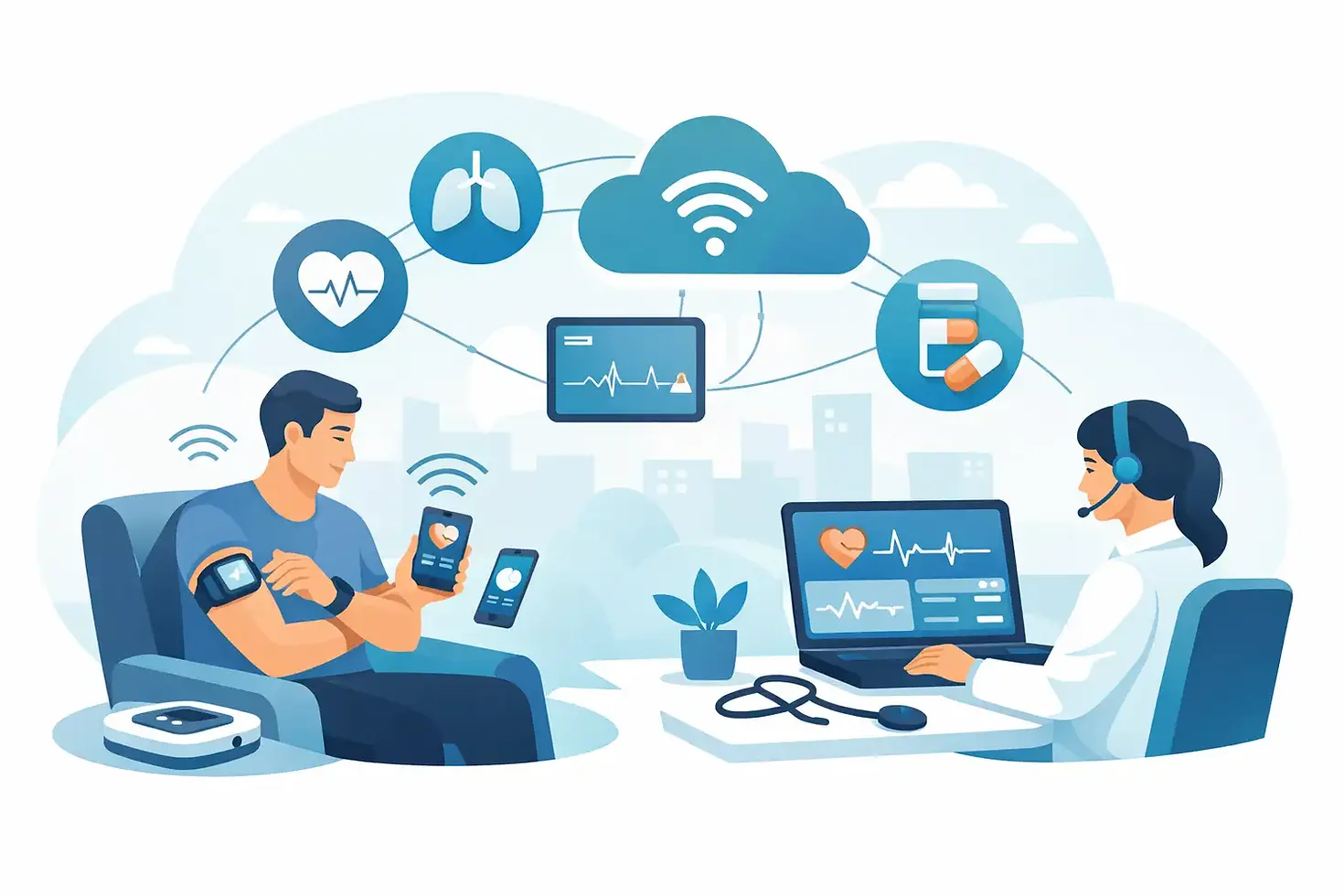
What a Remote Therapeutic Monitoring Device Does

A missed dose rarely looks dramatic in the moment. But across a Medicare population, a specialty pharmacy program, or a clinical trial cohort, those missed doses turn into failed therapy, preventable utilization, bad data, and lost revenue. That is why the right remote therapeutic monitoring device matters. It is not just another connected gadget. It is infrastructure for capturing whether therapy is actually being followed and how patients are responding between visits.
For healthcare organizations, this distinction is critical. Many monitoring programs can collect symptoms. Far fewer can reliably connect symptoms to real medication-taking behavior. If you cannot see adherence at the point of medication access, you are left making clinical and operational decisions with a missing variable.
Why a remote therapeutic monitoring device is different
Remote therapeutic monitoring is often discussed as if it were simply software, messaging, or a patient questionnaire. That misses the operational reality. RTM becomes far more valuable when the device collecting data sits close to the therapy itself and removes barriers that cause underreporting, missed engagement, and workflow breakdown.
A remote therapeutic monitoring device should do more than transmit data. It should create a dependable record of patient behavior and response to therapy in a format that supports care management, payer requirements, and scalable operations. That means it needs to work in the real world, not just in a pilot.
Real-world use is where many digital health programs struggle. If a device requires app downloads, home WiFi, Bluetooth pairing, password resets, or frequent troubleshooting, adoption drops fast. That is especially true among older adults, polypharmacy patients, and digitally underserved populations. The result is predictable: low engagement, thin datasets, and staff time wasted chasing basic setup issues instead of managing care.
The core job of a remote therapeutic monitoring device
At its best, a remote therapeutic monitoring device captures two forms of evidence that healthcare organizations need but often lack.
First, it records medication access behavior. That is the closest practical signal to whether a patient is following therapy as prescribed in the home setting. Second, it pairs that information with response-to-therapy data, including patient-reported symptoms or outcomes. This combination matters because adherence without outcomes is incomplete, and outcomes without adherence context are often misleading.
For provider groups and RPM companies, this creates a stronger clinical picture. For pharmacies, it supports intervention before non-adherence becomes abandonment or discontinuation. For clinical trials and CROs, it improves confidence in protocol compliance and helps separate therapeutic failure from adherence failure. Those are not small improvements. They change the quality of decision-making.
What healthcare buyers should evaluate first
The first question is not whether a device is technically impressive. The first question is whether patients will actually use it consistently without added friction.
A strong RTM device should be plug-and-play. It should not depend on a smartphone. It should not require patient WiFi. It should not ask an 82-year-old patient with multiple chronic medications to learn another app just to generate billable monitoring time. Every extra step reduces participation and weakens the economics of the program.
The second question is whether the data is actionable. Some tools produce dashboards full of activity but little clarity. Healthcare organizations need data that can trigger outreach, stratify risk, support documentation, and fit reimbursement workflows. If the signal does not lead to intervention, it becomes noise.
The third question is scalability. A device may work well with 25 highly supported patients and fail at 2,500 distributed across markets. Cellular connectivity, easy deployment, low support burden, and straightforward onboarding are not convenience features. They are what determine whether a program expands or stalls.
Why adherence data changes the economics of RTM
The business case for RTM is strongest when monitoring is tied to an intervention that providers can use. Medication adherence is one of the clearest examples because it affects outcomes, readmissions, therapy effectiveness, and reimbursement opportunity at the same time.
When a healthcare organization can identify non-adherence quickly, it can intervene earlier. That can mean adjusting education, escalating to a pharmacist, coordinating with caregivers, or addressing tolerability issues before the patient disengages from therapy altogether. Early intervention is clinically valuable, but it also protects the financial performance of the care model.
This is where many programs leave money on the table. They monitor symptoms without confirming whether the underlying therapy was followed. Or they distribute technology that a meaningful share of patients never fully activates. In both cases, the organization assumes the operational cost without gaining a dependable monitoring asset.
A remote therapeutic monitoring device that captures adherence and therapy response in one workflow creates a more defensible RTM program. It supports staff productivity, strengthens documentation, and increases the chance that monitoring activity translates into both patient value and billable value.
The older adult test
If a device does not work for older adults, it does not work for much of American healthcare.
That may sound blunt, but it is the practical truth for Medicare-focused providers, pharmacies, and monitoring companies. Many patients who most need ongoing therapy oversight are also the least likely to complete app setup, manage pairing steps, or troubleshoot home connectivity. Designing around ideal digital behavior is a strategic mistake.
A better model is to reduce patient burden to near zero. Battery-operated hardware, cellular transmission, and no dependence on personal technology remove the most common points of failure. That matters for equity, but it also matters for margin. Every avoided support call, failed setup, and abandoned device protects operational efficiency.
This is one reason device architecture matters more than many buyers initially assume. Features on paper are easy to compare. Friction in the home is harder to see during procurement and much more expensive after deployment.
Where the strongest use cases are emerging
Provider groups are using RTM to build more accountable medication management programs around chronic disease, post-discharge follow-up, and high-risk populations. Pharmacies are using connected adherence solutions to extend visibility beyond the fill event and identify patients who need intervention before they fall off therapy. Clinical research organizations are looking for better real-world adherence evidence so study outcomes are not distorted by unmeasured non-compliance.
In each case, the value proposition is slightly different, but the underlying need is the same. Organizations need a trustworthy signal from the home that does not rely on patient memory, self-report alone, or technology habits that many patients do not have.
That is where a company like RxKeeper fits naturally into the market conversation. A device that is FDA-registered, built for medication adherence at the point of access, and designed without app or WiFi dependency addresses the exact operational barriers that weaken RTM adoption. More importantly, it aligns clinical insight with reimbursement pathways instead of forcing healthcare organizations to choose between patient usability and program economics.
What to watch for before you buy
Not every RTM solution marketed as scalable will hold up under real deployment conditions. Buyers should look closely at implementation burden, data completeness, patient usability, and whether the device supports measurable intervention workflows rather than passive observation.
They should also ask a harder question: does this technology solve the adherence problem, or does it merely document that the problem exists? There is a real difference. The best solutions do not just create visibility. They help organizations act sooner, manage larger populations with less friction, and connect monitoring data to revenue-producing care processes.
That is especially important in environments where staffing is constrained and every new technology competes for clinical attention. If a device creates more work than value, it will not last. If it reduces friction while improving both outcomes and reimbursement performance, it becomes part of the operating model.
Healthcare organizations do not need more disconnected data streams. They need monitoring tools that work where treatment succeeds or fails - in the home, around actual medication use, with patients who are not waiting to be trained on another app. A remote therapeutic monitoring device earns its place when it turns that everyday reality into actionable evidence, without asking patients or staff to carry one more avoidable burden.



Comments